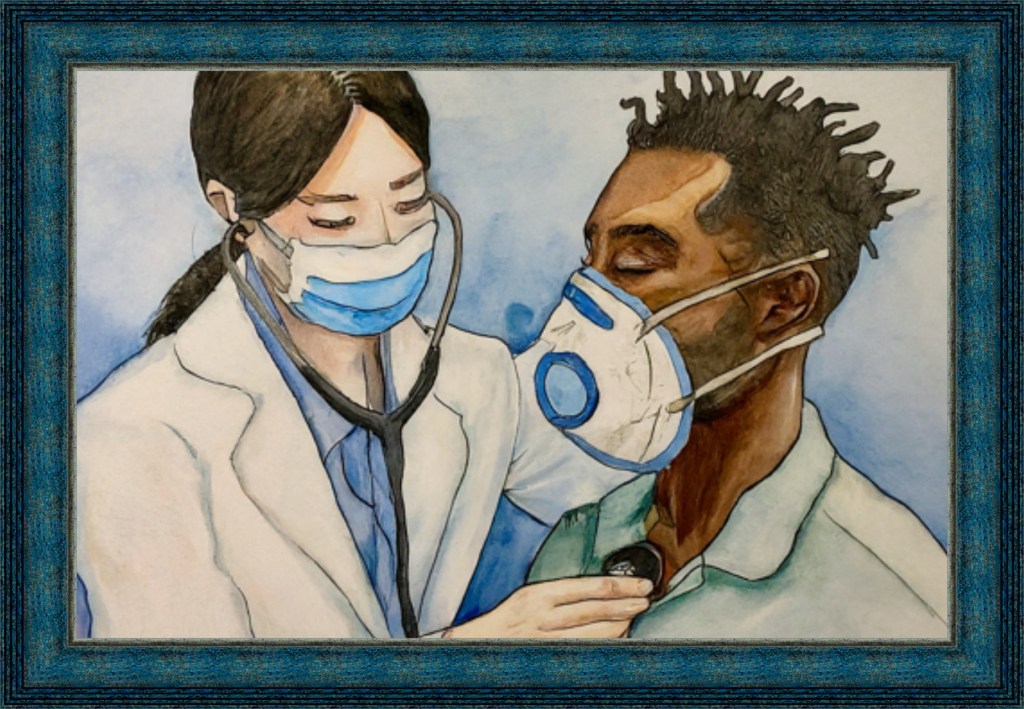
Obviously, we learn that occupational hazards vary from industry to industry. As far as biological hazards are concerned, industries at risk include health care services, agriculture and livestock keeping industries, slaughtering, transportation of livestock, manufacturing, and processing of animal or plant products. Any precautions, essentially speaking, are pivotal and should be taken against these hazards; particularly, for work involving frequent contact with and the handling of contaminants or waste such as cleaning, drainage and repairs.
CASE ANALYSIS
To begin with, a woman named “Margareth” had been working as a health care worker at a residential care home for the elderly roughly around three years. Her daily job was to provide personal care service for the residents, such as assisting them in eating and bathing, tidying beds and cleaning wounds. About three months ago, Margaret began to cough persistently. Later on, she had blood-stained sputum, weight loss and frequent night sweating. She sought treatment at a chest clinic and the X-rays showed opacities in her lungs. What’s more, mycobacterium tuberculosis was identified in her sputum and the doctor diagnosed that she had pulmonary tuberculosis.
Furthermore, Margaret contracted pulmonary tuberculosis for the following reasons:
1. First, three months before the onset of her disease, Margaret was taking care of a resident (Mr. Chan) who had been coughing for weeks. He was arranged to see a doctor after a few weeks when he had blood-stained sputum. Mr. Chan was diagnosed as having pulmonary tuberculosis and admitted to a hospital for treatment.
2. Second, while Mr. Chan was staying at the elderly home, his droplets containing the bacteria might disperse in the air whenever he coughed and sneezed. As Margaret did not wear a suitable mask while she was taking care of him, she might have inhaled the infective droplets.
3. Third, inadequate ventilation at the elderly home resulted in accumulation of the bacteria in the air.
4. Fourth, Margaret did not have adequate rest and exercise, which made her more vulnerable to diseases.
PREVENTIVE MEASURES
The following measures can help to prevent contracting pulmonary tuberculosis at a residential care home for the elderly:
1. Keep the workplace clean and well-ventilated.
2. Staff should put on surgical masks properly while at work.
3. Residents and staff with symptoms of respiratory tract infection should put on surgical masks.
4. Cover noses and mouth with tissue paper when coughing or sneezing and handle respiratory secretions properly. Frequent hand hygiene to keep hands clean and to reduce transmission of bacteria.
5. If residents or staff are suspected to have contracted pulmonary tuberculosis with symptoms such as persistent cough, blood-stained sputum, weight loss, afternoon fever and night sweating, they should seek medical treatment as soon as possible.


 The Dark Knight
You must be logged in to post a comment.